What if Mental Stimulation for Dogs Is Simpler Than You Think?!
Mental stimulation for dogs is about giving their brain something fun to do, not adding another chore to your routine. And for dogs with busy minds, these moments can make daily life feel a lot more balanced. It can also help keep your aging pet’s mind sharper for longer.
Research on canine enrichment shows that giving dogs opportunities to problem-solve, explore, and use their senses can support emotional well-being and reduce stress-related behaviors.
Mental enrichment isn’t about trying to outsmart your dog or keeping them busy 24/7. In the same way we enjoy conversations, hobbies, or learning new skills, they enjoy using their brain! And when their brain feels engaged, life at home… flows better.
Below are 5 everyday ideas you can start using right away — easy, realistic, and perfect for puppies, adult dogs, and all of our wonderfully bright fur-babies.

1. Let Them Sniff, It’s Their Version of Reading the News
Sniffing isn’t a “distraction.” It’s brain work.
Dogs have up to 300 million scent receptors, compared to our 5–6 million, meaning their nose is basically a biological supercomputer.
Dogs process the world through scent, and every blade of grass tells them something new: who walked by, what changed overnight, and what’s happening in their environment.
Allowing sniff breaks during walks is one of the best forms of brain stimulation for dogs because it taps into instincts they’re wired for. A slow, sniff-heavy walk can give them more mental fulfillment than a fast-paced one.
Try this:
- Set aside a few “sniff walks” a week
- Let your dog lead part of the route
- Pause at interesting spots and let them investigate
Your dog isn’t stalling or being stubborn. They’re gathering their daily “sniff newsletter.”
2. Try Scent Games for Dogs (Indoor or Outdoor)
Scent games are dog detective missions. They tap into your pet’s natural tracking instincts and give their brain a satisfying job.
Ideas to try:
- Treat scatter: Toss small treats in the grass or around a room.
- Cup game: Hide a treat under one of three cups and let them choose.
- Snuffle mats: Encourage natural foraging behavior indoors.
- Scent trails: Drag a treat along the floor and let them follow the path.
- Hide-and-seek toys: Great for dogs who love retrieving or hunting-type play.
These games build problem-solving skills, confidence, and a healthy outlet for curiosity. Puppies love them, adult dogs thrive on them, and seniors can enjoy gentler versions with just as much stimulation.
3. Add Short, Simple Mental Exercises for Dogs
You don’t need long sessions — mental exercises for dogs work beautifully in tiny bursts.
A few ideas:
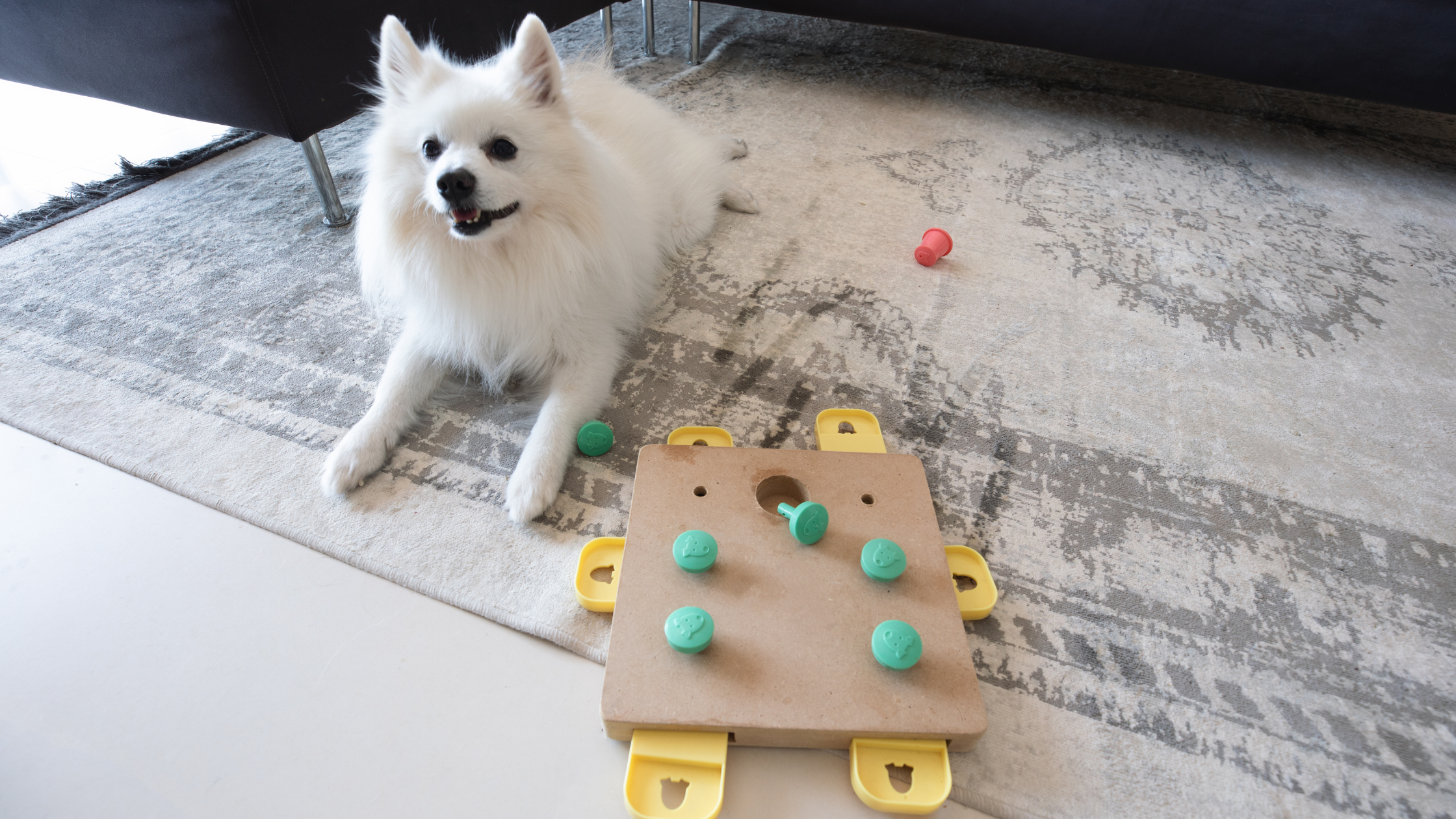
- Puzzle feeders or slow-bowl feeders
- Lick mats (soothing and mentally engaging)
- 60-second skill refreshers: sit, stay, touch, spin, “find it”
- Indoor obstacle paths: pillows, chairs, or tunnels
- Toy rotation: put away toys and reintroduce them throughout the week
- Name-the-toy games to build memory and recognition
Think of these moments like your dog’s version of doing a mini crossword puzzle. It’s just enough to give their brain something new to chew on.
4. Support Breeds That Need Mental Workouts
Some dogs weren’t bred for quiet couch days, they were bred to think. Tracking, herding, hunting, retrieving, or solving problems. When these dogs don’t get mental stimulation, boredom can show up fast.
Breeds like Spaniels, German Shepherds, Border Collies, Aussies, Terriers, Poodles, and many Retrievers, to name a few, often crave deeper mental stimulation because their ancestral jobs required advanced problem-solving.
Even mixed-breed dogs can have strong working instincts. How your dog plays, explores, and solves problems will tell you what kind of mental stimulation they naturally gravitate toward.
- Do they sniff every corner?
- Herd toys?
- Retrieve constantly?
- Solve puzzles fast?

5. Support Their Brain With Food and Key Nutrients
We can’t talk about a sharp dog brain without acknowledging the role of diet and nutrients. Dogs don’t need complicated routines, just thoughtful support.
Nutrients that may help:
- Omega-3s (like fish oil) for cognitive support. DHA and EPA are often linked to learning, focus, and overall brain balance.
- Antioxidants from pet-safe fruits such as blueberries and apples. These help buffer everyday oxidative stress and support long-term brain health. Blueberries especially get a lot of attention for cognitive aging.
- B vitamins for energy and focus. These are often associated with healthy nerve function and steady energy — helpful for pets who feel either wired or tired.
- Healthy fats to feed the brain. The brain runs on fat. Adding things like salmon, sardines, or dog-safe coconut oil can support clarity and overall balance.
- Turmeric is a gentle way some pet parents support a balanced inflammatory response, which can indirectly influence brain comfort.
- Eggs (for choline and protein). Simple, accessible, and nutrient-rich. When cooked and unseasoned, they’re a great brain-friendly food.
- Leafy greens (finely chopped or steamed). Spinach, kale, and other greens carry phytonutrients that may support long-term cognitive function in pets.
- Probiotics. The gut-brain connection isn’t just a human thing — many dogs behave and focus better when digestion feels balanced.
And because digestion and nutrient absorption can influence energy and behavior, you can use bioenergetic testing to identify energetic stress patterns related to nutrition.
A Note for Cat Parents, Too
Cats love mental stimulation just as much as dogs; they just express it differently.
Try:
- Puzzle feeders
- Wand toys
- Window perches
- Hide-and-seek treats
- Paper bags or boxes as “hunting caves”
A few small enrichment moments each day can do wonders for feline mood and behavior.
A sharper, happier pet doesn’t require complicated routines, just small, thoughtful moments sprinkled throughout your day. Whether it’s a scent game, a sniff walk, a puzzle bowl, or a nutrient-rich food, each experience helps your dog (and your cat) explore, think, and feel more connected to the world around them.